A Crisis Is Where a Company's Character Shows
The first question asked when production goes down sets a company's culture for years. The human side of a crisis: fear, silence, and what actually changes six weeks later.
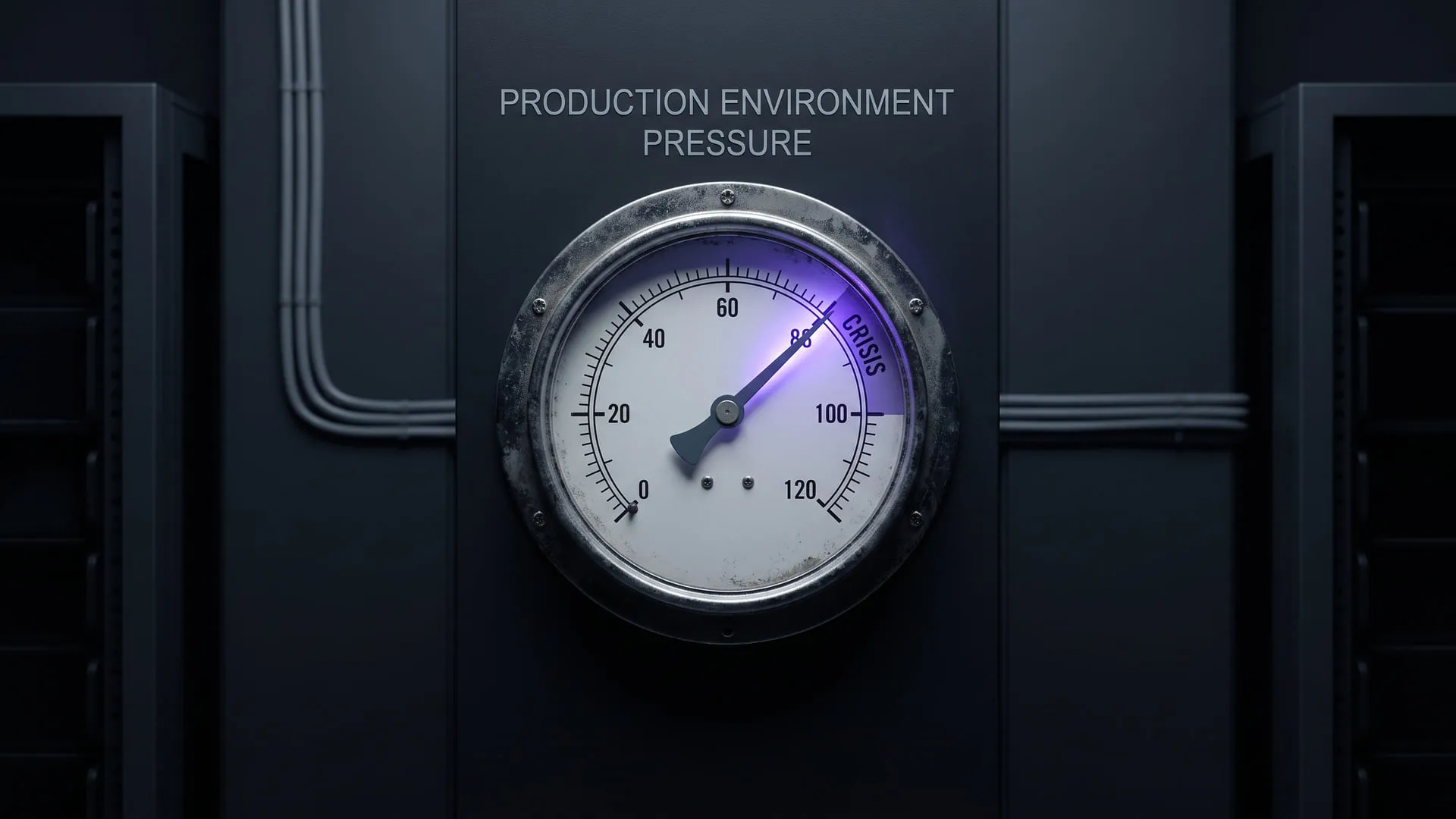
We were gathered in one room in the middle of the night. Production was down, phones were ringing, everyone was staring at a screen. And the first question in that room wasn’t “What happened?”
It was “Who did this?”
The moment that question was asked, everyone in the room learned something. Nobody said anything, nobody objected; we just learned it. We fixed the problem within a few hours, we were up until morning, the system came back. But after that night, nobody at that company ever brought bad news early again. Whoever noticed something going wrong tried to fix it alone first, then tried a little longer when that failed, then a little longer still — and the news always reached the room late.
The problem got fixed. The company got broken.
In the first post of this series I listed four axes; the third was this: who gets billed for mistakes? This post is given over entirely to that one. The technical side of a crisis — how you detect it, how you roll back, how you set up an on-call rotation — isn’t the subject here. The subject is this: what got said in that room that night, who stayed quiet, and what had changed six weeks later.
Crisis reflexes are predictable by company type
I’ve lived through crises in both types, and after a while I noticed the reflexes are almost forecastable.
The owner-run company looks for a culprit. There’s a logic to it: decisions there sit with one person, so a mistake must sit with one person too. It’s fast — a name gets found, the matter is closed, everyone goes to bed. But that speed manufactures fear. And fear kills reporting. In the next crisis you won’t learn about the system in an hour, you’ll learn in six — because in the five hours between, someone was quietly trying to save the situation on their own.
The corporate produces procedure. That has its own logic: decisions there sit with a role, so a mistake must sit with the system. Responsibility gets distributed, nobody is blamed alone. This is more humane than the owner-run version — but somewhere it goes strange. The thing called a “blameless postmortem” sometimes turns into less of a meeting and more of a performance: nobody blames anyone, because nobody owns anything. A room where nobody is blamed but nobody takes responsibility either is a room where nobody learns anything.
Both are broken. But broken in different directions: one dumps ownership onto a single person, the other evaporates it. The balance in between — ownership without punishment — doesn’t form on its own.
The real cost of hunting for a culprit isn’t a person, it’s a system
The obvious cost of finding a culprit is assumed to be the morale of the person blamed. It isn’t. The real cost is far more insidious.
The person who got blamed will never report early again. They don’t do it as a conscious decision, thinking “I’m not saying anything next time”; they just wait a bit longer to check something the next time round. They want to be sure. They want to be very sure.
And the people watching them do exactly the same. The punishment is handed to one person; the lesson is written across the whole room.
Here’s the result: in the next crisis, the company doesn’t find out an hour later. It finds out a day later. Fear stretches the time to detection — and time to detection is the real cost of a crisis. Whether the system comes back in half an hour or half a day is determined not by how “severe” the fault was, but by how fast the news reached the room. A company that hunts for culprits stretches its own detection time with its own hands, and never once sees it as a line item.
The healthy reflex: “How was this even possible?”
The right question is obvious and easy to say: How was this even possible?
Not a question about a person; a question about a system. Not “who deployed this” but “how was it possible for anyone to deploy this”. Two sentences describing the same event; two completely different companies.
But let’s be honest. Writing that in a blog post is easy. Doing it in the second hour of a crisis, while money is bleeding, while a customer is shouting on the other end of the phone, while you haven’t slept — that’s hard. The sentence that forms in your head at that moment isn’t “how was this possible”, it’s “who did this”. That’s a human thing; it isn’t shameful.
What you have to see is this: nobody’s natural reflex is the right one. That reflex is learned. And it’s almost always learned from above. Whatever question the most senior person in the room asks, the room learns that question. Nobody learns it by reading a culture document; they learn it by watching what someone said in a crisis.
The people who stay quiet in a crisis are the most expensive people you have
In every crisis there’s at least one person in the room who knows something is wrong and isn’t saying it.
Assuming that person is acting in bad faith is easy, and wrong. That person isn’t a saboteur. That person is someone who has already paid the price for speaking up. They raised a risk once and got “no time, ship it” back; they flagged a mistake early once and were declared its owner. Now they’re quiet. Their silence isn’t a character flaw, it’s a learning outcome.
This is why saying “everyone can speak freely here” achieves nothing. A company’s silence is produced not by its culture but by its memory. People don’t remember what you said. They remember what happened to the last person who spoke.
Question: How do I tell whether psychological safety actually exists at a company? Answer: Look at where the person who brought the bad news first in the last crisis is today. If they got promoted, or at minimum nothing happened to them, safety exists. If they quietly slid to the sidelines, everyone has already seen it and nobody is going to tell you.
The real test happens six weeks later
Right after a crisis, everyone says the right sentences. “We learned from this.” “It won’t happen again.” “We’re adding a process.” Those sentences can be perfectly sincere; sincerity isn’t the problem.
The measure isn’t what gets said. It’s what has actually changed six weeks later.
At most companies, the only thing that has changed six weeks later is a document. A page was written, it was put somewhere, nobody opened it. That document protects no one — because in a crisis nobody reads documents. In the next crisis the same people walk into the same room with the same faces and the same first question gets asked.
If something has genuinely changed, you’ll see it not in a document but in how people behave: someone who isn’t sure about something now speaks up earlier; someone who spots a mistake doesn’t hide it; the sentence “I did that” gets said as a piece of information rather than a confession. These aren’t measurable things, but they are visible ones.
To know whether a company learned anything from a crisis, don’t look at the day after. Look six weeks later.
Three desks
From the senior engineer’s desk. In a crisis you have two valuable things: calm and a record. Write down what you did — not to defend yourself, but because in two hours nobody will remember who did what. Memory is the first thing to go in the middle of a crisis; who tried what and when is gone from everyone’s head within half an hour. Your constraint: staying calm in the middle of a crisis is not a character trait, it’s a practice. You will not be calm in your first few crises; your hands will shake, you’ll type the wrong command. That’s normal, and don’t judge yourself for it. Calm arrives after a few crises — not before.
From the manager’s desk. You have to shield your team. If you don’t put yourself between the “who did this” coming from above and the people below, nobody will ever bring you bad news again and you’ll become the person who learns everything last — which means you can no longer do your job. Your constraint: you are being asked for a name too, and “the system” doesn’t satisfy the people asking. If you don’t give a name, you become the name. You’re the one who pays for the shielding. The reason most managers don’t do it isn’t bad faith, it’s that price. But once you’ve paid it, your team never forgets — and from that day on they tell you everything early.
From the owner’s desk. The sentence you say in the first 24 hours sets the company’s culture for two years. Your anger is legitimate: it’s your money, your customer, your reputation; you’re the one who didn’t sleep, and the loss is yours. Nobody begrudges you that. But the sentence you say that night determines how late bad news will reach you for the next two years. Say “who did this,” and next time you’ll be the last to hear about it. Your constraint: nobody taught you what to say in a crisis. The engineer has a manager, the manager has an owner; you have no one to turn to, and that night you are the loneliest person in the room.
All three desks are right, all three are incomplete. But among the three there is exactly one sentence that sets the culture, and it comes from the desk at the top.
Closing
A crisis doesn’t create a company’s character — it only makes it visible. What was already there surfaces under pressure.
Owning the outcome of a decision is the side of seniority that doesn’t come with the title; how a company owns the outcome of a mistake is the same thing. Both get measured in a crisis, not in a job ad.
The next time you’re in the room during a crisis, watch one thing: what the first question was. Write the answer down. That question will tell you more honestly about the next two years you’d spend at that company than every culture document it has.
Comments
Sign in with your GitHub account to join the discussion. Comments are stored in GitHub Discussions.